


El 26 de septiembre de 2024, en plena madrugada, aterrizamos en el aeropuerto de Kilimanjaro, en Tanzania. Ese fue el comienzo de una gran aventura que nos llevó a conocer tres lugares inolvidables donde es posible encontrar vida silvestre en todo su esplendor: Tarangire National Park, Ngorongoro Conservation Area y Serengeti National Park.
Sin embargo, el viaje había comenzado un año antes, cuando unos amigos nos invitaron a sumarnos para hacer un safari en África.
On September 26, 2024, in the middle of the night, we landed at Kilimanjaro airport in Tanzania. That was the beginning of a great adventure that took us to three unforgettable places where it is possible to find wildlife in all its beauty: Tarangire National Park, Ngorongoro Conservation Area and Serengeti National Park.
However, the trip had started a year earlier, when some friends invited us to join them for a safari in Africa.
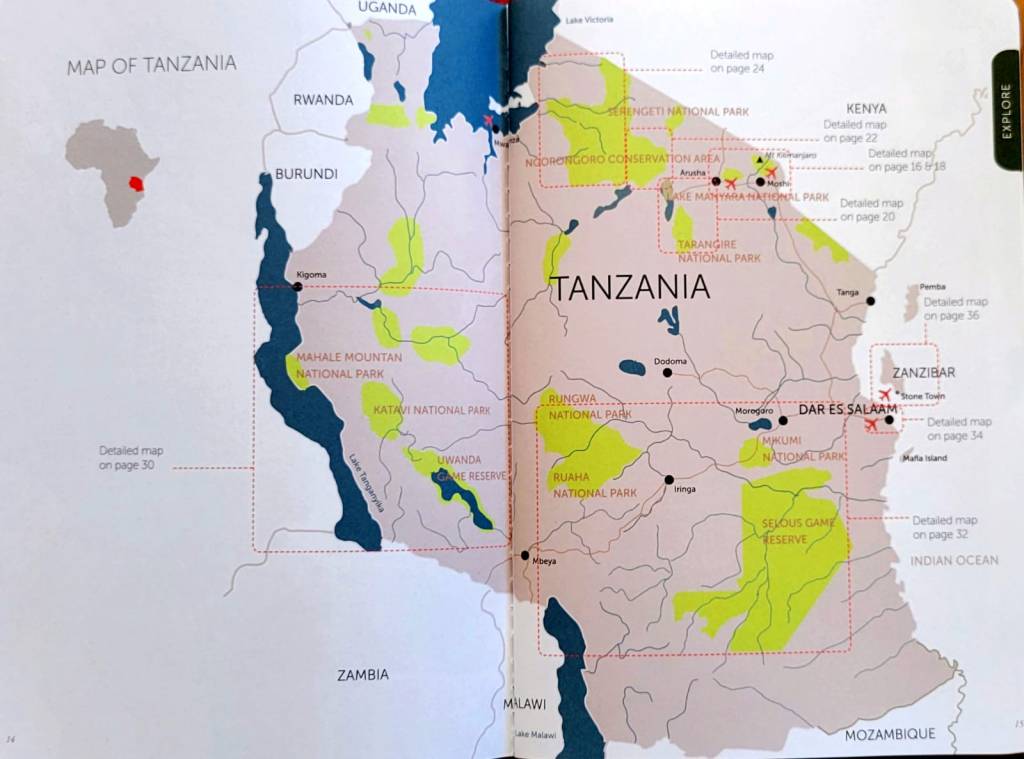
Los preparativos comenzaron desde cero: decidir qué país o países visitar, elegir una empresa que nos ayudara con la logística, definir cuál sería la mejor época del año, el tipo de alojamiento, los traslados internos y los parques que queríamos conocer, entre muchas otras cosas.
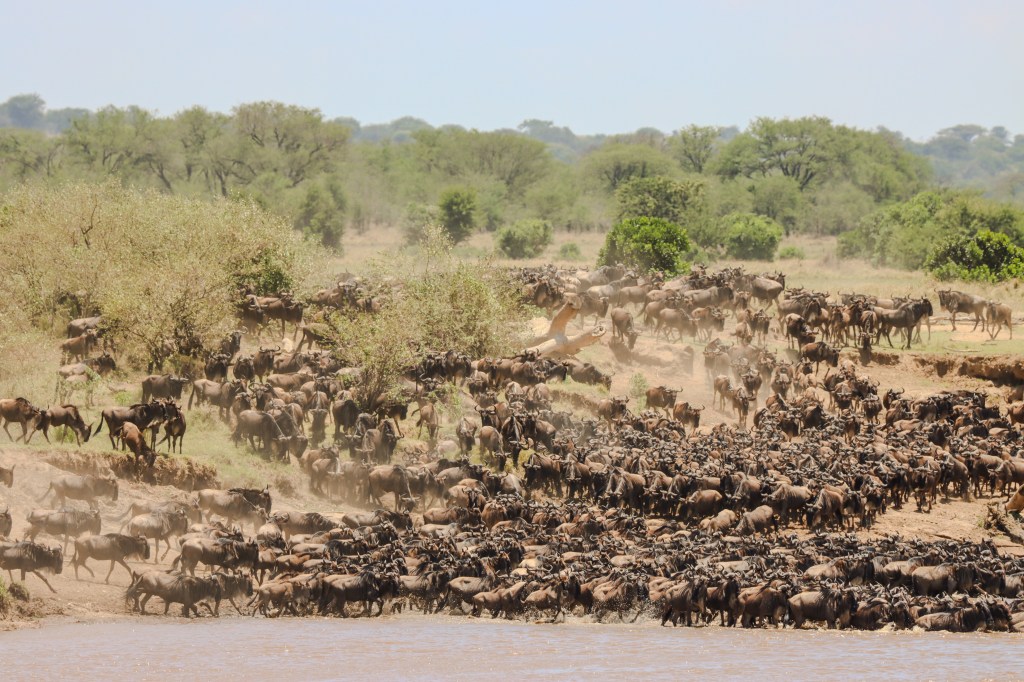
Un deseo de los seis que haríamos el viaje era clara: presenciar la Gran Migración. Y tuvimos la suerte de ser testigos de ese increíble espectáculo donde ñus y cebras cruzan el río, y no sólo una sino dos veces 🙂
Me disculpo por no seguir el orden del relato y espoilear información, pero no pude evitarlo 😉 La foto a continuación es una muestra de lo ocurrido.
The preparations started from scratch: deciding which country or countries to visit, choosing a company to help us with logistics, defining the best time of the year, the type of accommodation, internal transfers and the parks we wanted to visit, among many other things.
One wish of the six of us who would make the trip was clear: to witness the Great Migration. And we were lucky to be able to watch this incredible event where wildebeest and zebras cross the river, and not only once but twice 🙂
I apologize for not following the order of the story and spoiling information but I couldn’t help it. 😉 The photo below is a sample of what happened.
Volviendo al tema de los preparativos, Barnaby y Hossam se pusieron manos a la obra. Tuvieron muchísimas conversaciones entre ellos, leyeron cuidadosamente las propuestas de diversas compañías y tuvieron largas charlas con cada una. El resultado fue un viaje soñado, una experiencia tan bien organizada que seguimos agradeciéndoles hasta el día de hoy.
Además de los detalles del itinerario, hubo otro tipo de preparativos esenciales. Tuvimos que chequear cuáles eran las vacunas necesarias antes de viajar, tramitar la visa para Tanzania, el país que elegimos para el safari, y revisar las recomendaciones sobre medicamentos y sprays para insectos. También consultamos sobre qué tipo de ropa llevar: nada con colores oscuros como negro o azul, porque atraen a las moscas tsé-tsé.
La cantidad de ropa fue otro desafío, ya que en los pequeños aviones de traslados internos el límite de equipaje era de apenas 20 kilos. Todo este proceso fue un aprendizaje y además, no voy a engañarte, un generador de estrés.
Returning to the subject of preparations, Barnaby and Hossam got down to work. They had many, many conversations with each other, carefully read the proposals of various companies and had long talks with each one. The result was a dream trip, an experience so well organized that we are still grateful to this day.
In addition to the details of the itinerary, there were other essential preparations. We had to check what vaccines were required before traveling, apply for the visa for Tanzania, the country we chose for the safari, and review the recommendations for medicines and insect sprays. We also consulted about what kind of clothes to wear: no dark colors like black or blue, because they attract tsetse flies.
The amount of clothes was another challenge, since in the small planes for internal transfers the baggage limit was only 20 kilos. This whole process was a learning experience and also, I’m not going to lie to you, a source of stress.

Unos meses antes del viaje, quizás por el efecto de tantos preparativos, me angustié muchísimo. Un miedo desconocido se coló en mi vida. De repente, no quería viajar a Tanzania. Tenía miedo de enfermarme, de que algún insecto extraño me picara y arruinara mi salud para siempre. Así de exagerado e irracional como te lo cuento. Lo más curioso era lo específico de mi malestar, como si mi mente se hubiera agarrado de esos pensamientos catastróficos para sabotearme.
A few months before the trip, perhaps because of the effect of so many preparations, I became very anxious. An unknown fear sneaked into my life. Suddenly, I did not want to travel to Tanzania. I was afraid I would get sick, that some strange insect would bite me and ruin my health forever. That’s how far exaggerated and irrational I’m telling you. The funny thing was how specific my discomfort was, as if my mind had picked out these catastrophic thoughts to sabotage me.

Lo que me mantuvo firme en el plan de viajar fue pensar que no estaríamos solos, que iríamos con amigos y que si alguna rara situación ocurriera estaríamos juntos. Mientras escribo no puedo evitar reírme del sinsentido de todo. Pero más allá de esos temores ¿infundados? una cosa fue clara: no nos equivocamos al elegir a nuestros compañeros de aventura y hubiera sido un error imperdonable haber cancelado el viaje 🙂
What kept me firm in the plan to travel was the thought that we would not be alone, that we would go with friends and that if some weird situation happened we would be together. As I write I can’t help but laugh at the nonsense of it all. But beyond those unfounded fears? one thing was clear: we were not wrong in choosing our adventure partners and it would have been an unforgivable mistake to have cancelled the trip 🙂

Volvamos al aeropuerto de Kilimanjaro 😉 . En las ventanillas de migraciones presentamos los pasaportes junto con las visas para ingresar al país. La recepción de los documentos fue lenta, el procedimiento necesitaba de muchas anotaciones a mano y se me ocurrió que además al ser de madrugada, los empleados podrían estar cansados.
Durante el viaje entendí que no era lentitud, sino un ritmo distinto al que estoy acostumbrada. Recordé una crónica escrita por Martín Caparrós durante su viaje por África llamada «Pole Pole« (*)y rescato este fragmento:
«Póle póle parece ser el concepto basico del weltanschauung swahili: se podría traducir libremente como tranqui, para-que-calentarse, take it easy. Se lo puede pensar como una manera de saber vivir sin apremios o resignarse a los ritmos posibles, o como una forma de resistencia pacífica: cuando cualquier prisa es
benefició para el amo, ir póle póle es una forma de recortarle las ganancias»
Let’s go back to Kilimanjaro airport 😉 At the immigration counters we presented our passports and visas to enter the country. The reception of the documents was slow, the procedure required a lot of handwritten notes and it occurred to me that since it was at dawn, the employees might be tired.
During the trip I understood that it was not slowness, but a different rhythm to the one I am used to. I remembered a chronicle written by Martín Caparrós during his trip through Africa called “Pole Pole” (*) and I extract this fragment:
«Póle póle seems to be the basic concept of the Swahili weltanschauung: one could
translate loosely as calm, take it easy. It can be thought of as a way of knowing how to live without pressure or to resign oneself to the rhythms
possible, or as a form of peaceful resistance: when any rush
is beneficial to the master, is a way to cut his profits».

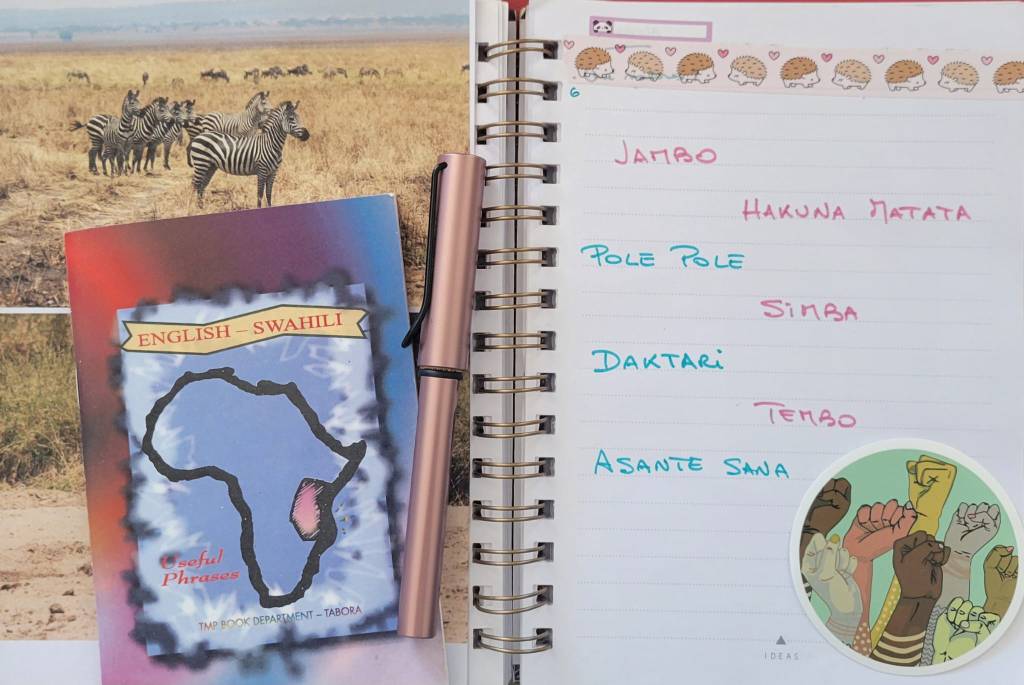
Debo confesar que el idioma swahili fue sorprendió de diversas formas: escuchar y decir Jambo Jambo (buenos días) cada mañana me ponía de buen humor, me alegraba probablemente por la sonoridad acompañada de caras sonrientes. Aprendí a decir gracias y de nada: Asante Sana y Karibu Sana y una frase que seguramente vos también conozcas: Hakuna Matata (no te preocupes, no hay problema) y que escuché y dije muchas veces durante el viaje.
Sin embargo, aprendí algo mucho más profundo: el swahili, idioma oficial en Tanzania, Kenia y Uganda, y ampliamente utilizado en el este de África, ha sido promovido a lo largo de los años por intelectuales, escritores, activistas por los derechos civiles, profesionales de la salud y líderes políticos como un idioma para la unificación.
Julius Nyerere, el primer presidente de Tanzania en la década de 1960, lo adoptó como una herramienta clave para la reunificación nacional y lo definió como la lengua de la liberación, fue un gran promotor del swahili.
El tema del idioma me pareció fascinante y si querés saber un poco más dejo unos links al final.
I must confess that the Swahili language surprised me in many ways: hearing and saying Jambo Jambo (good morning) every morning put me in a good mood, I was happy probably because of the sonority accompanied by smiling faces. I learned to say thank you and you’re welcome: Asante Sana and Karibu Sana and a phrase that I’m sure you also know: Hakuna Matata (don’t worry, no problem) and that I heard and said many times during the trip.
However, I learned something much more profound: Swahili, an official language in Tanzania, Kenya and Uganda, and widely used in East Africa, has been promoted over the years by intellectuals, writers, civil rights activists, health professionals and political leaders as a unifying language.
Julius Nyerere, the first president of Tanzania in the 1960s, adopted it as a key tool for national reunification and defined it as the language of liberation, was a great promoter of Swahili.
I found the language topic fascinating and if you want to know a little more I leave some links at the end.
Hay más viaje por contar, el recorrido por una parte muy pequeña de Tanzania me conmovió profundamente y eso es lo que me gustaría transmitirte en estas notas. Estoy muy agradecida de haber podido hacer la experiencia y también a todas las personas que fui encontrando durante el viaje y compartieron sus historias ❤️❤️
There is more travel to tell, the journey through a very small part of Tanzania touched me deeply and that is what I would like to transmit to you in these posts. I am very grateful to have been able to make the experience and also to all the people I met during the trip and who shared their stories ❤️❤️

Notas/ Notes
(*) El Malpensante – Pole, Pole, Martin Caparrós https://www.elmalpensante.com/articulo/1326/pole-pole
Article by John M Mugane (Professor Harvard University) https://theconversation.com/the-story-of-how-swahili-became-africas-most-spoken-language-177259
Artículo Norberto Paredes (BBC News Mundo) https://www.bbc.com/mundo/noticias-internacional-61260680

 VIAJES CRONICAS ARTE
Replica a Ricardo Jezzi Cancelar la respuesta