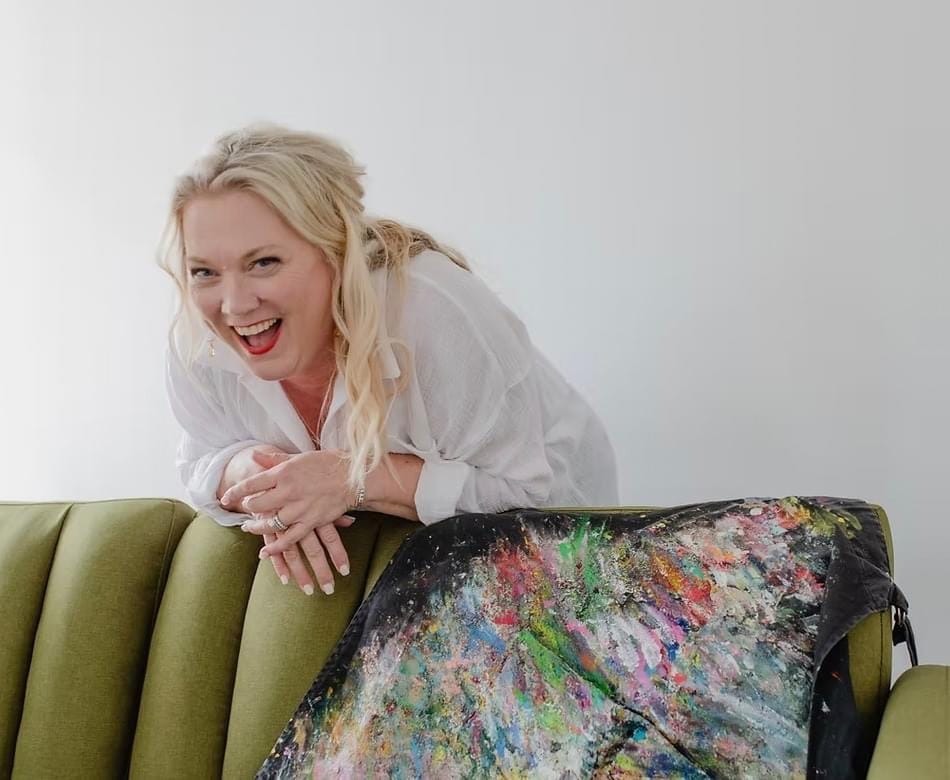
Camas, WA, USA
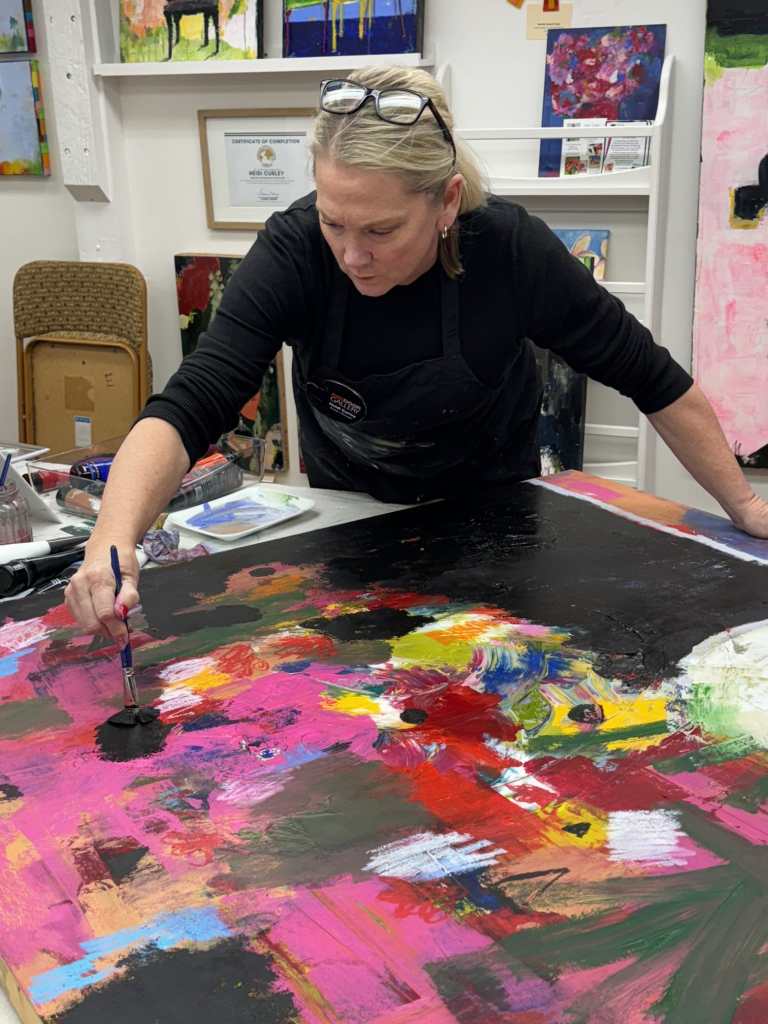
I met Heidi Curley https://www.instagram.com/heidicurleyart/ during a Camas First Friday in 2023 while she was creating a collective painting with Anna Norris https://www.instagram.com/annanorrisfineart/ and Tamra Sheline https://www.instagram.com/tamrasheline_artist/ on the street. It was an incredibly hot day, but their contagious joy kept many of us there, enjoying the moment.
Conocí a Heidi Curley https://www.instagram.com/heidicurleyart/durante un Camas First Friday en el 2023 mientras creaba una pintura colectiva junto con Anna Norris https://www.instagram.com/annanorrisfineart/ y Tamra Sheline https://www.instagram.com/tamrasheline_artist/ en la calle. Era un día muy caluroso, pero la alegría del grupo era tan contagiosa que nos mantuvo a muchos de nosotros allí, disfrutando del momento.
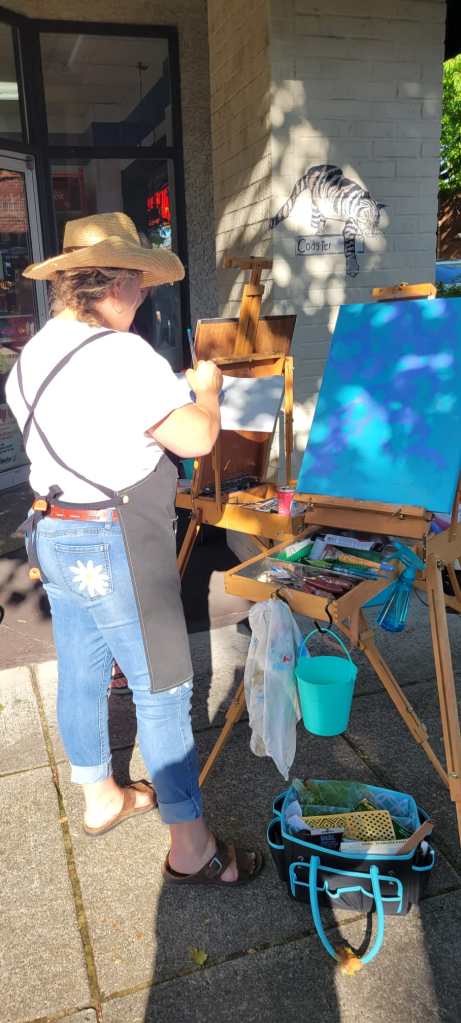
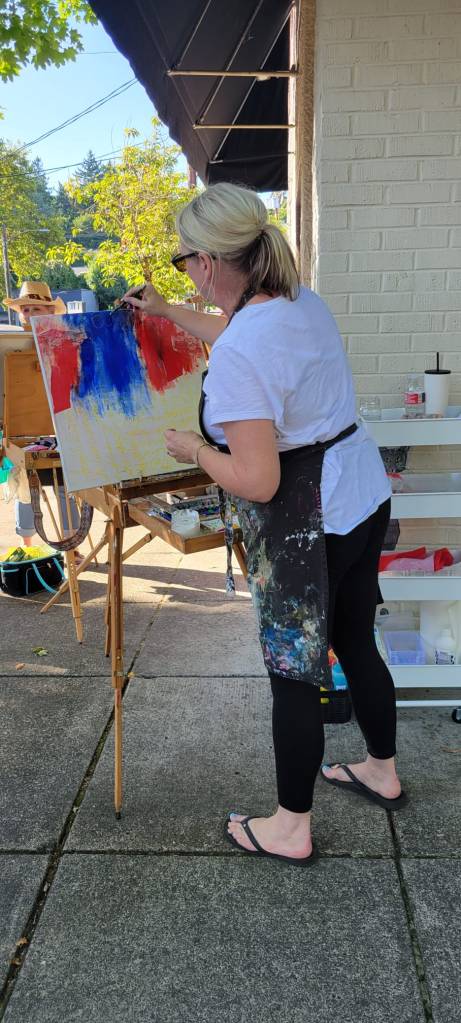
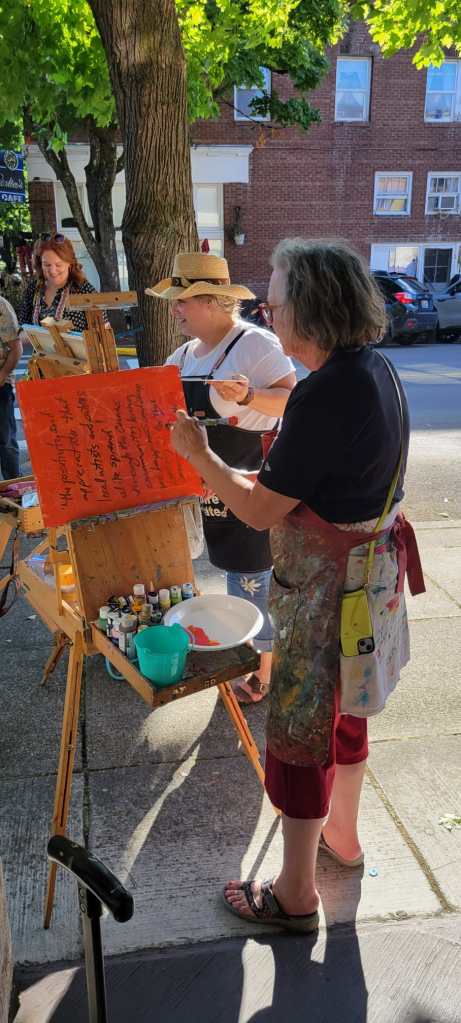
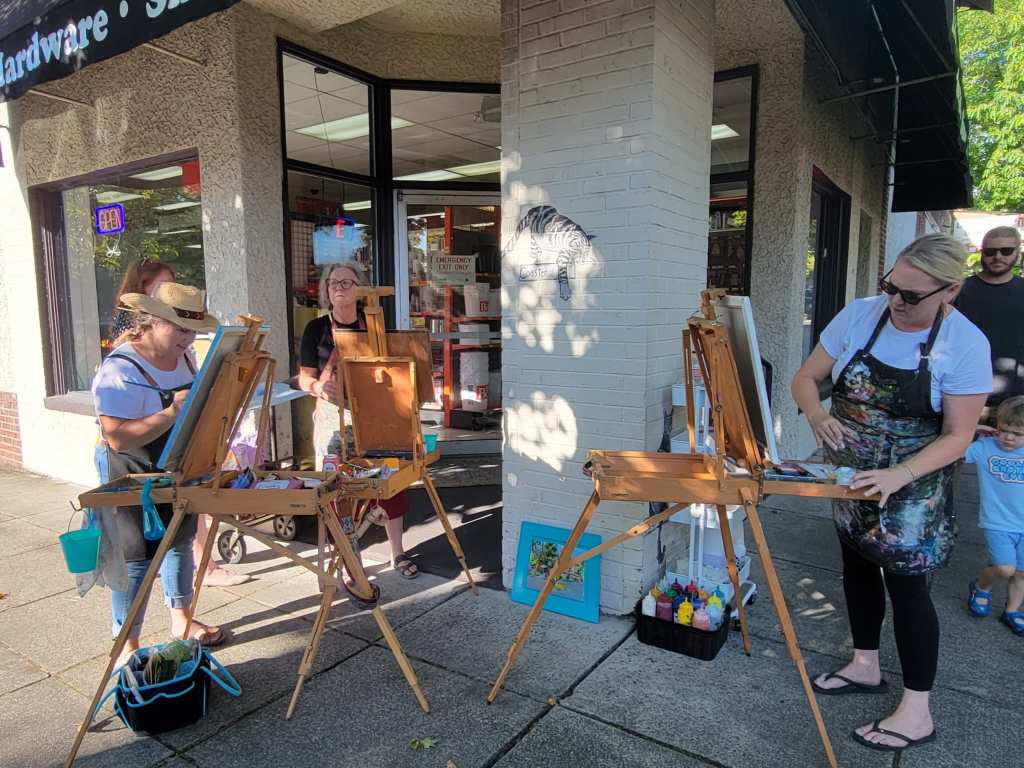
Heidi’s warmth immediately drew me in. In 2024, we stayed in touch, and I also had the opportunity to take one of her painting workshops. In that space, I not only learned from her art but also got to hear more about her story—how art became a vital tool for moving forward, both for her and her daughters, after her husband took his own life.
A few months ago, she opened a small and cozy studio in Camas, where she showcases her work and holds workshops, creating a space for creativity and connection.
La calidez de Heidi me atrapó de inmediato. Seguimos en contacto y en 2024 tuve la oportunidad de asistir a uno de sus talleres de pintura. En ese espacio, no solo aprendí sobre su arte, sino que también pude escuchar más acerca de su historia y cómo el arte se convirtió en una herramienta vital para seguir adelante, tanto para ella como para sus hijas, luego del suicidio de su marido.
Hace unos meses abrió un pequeño y acogedor estudio en Camas, donde expone su obra y organiza talleres, creando un espacio para la creatividad y la conexión.
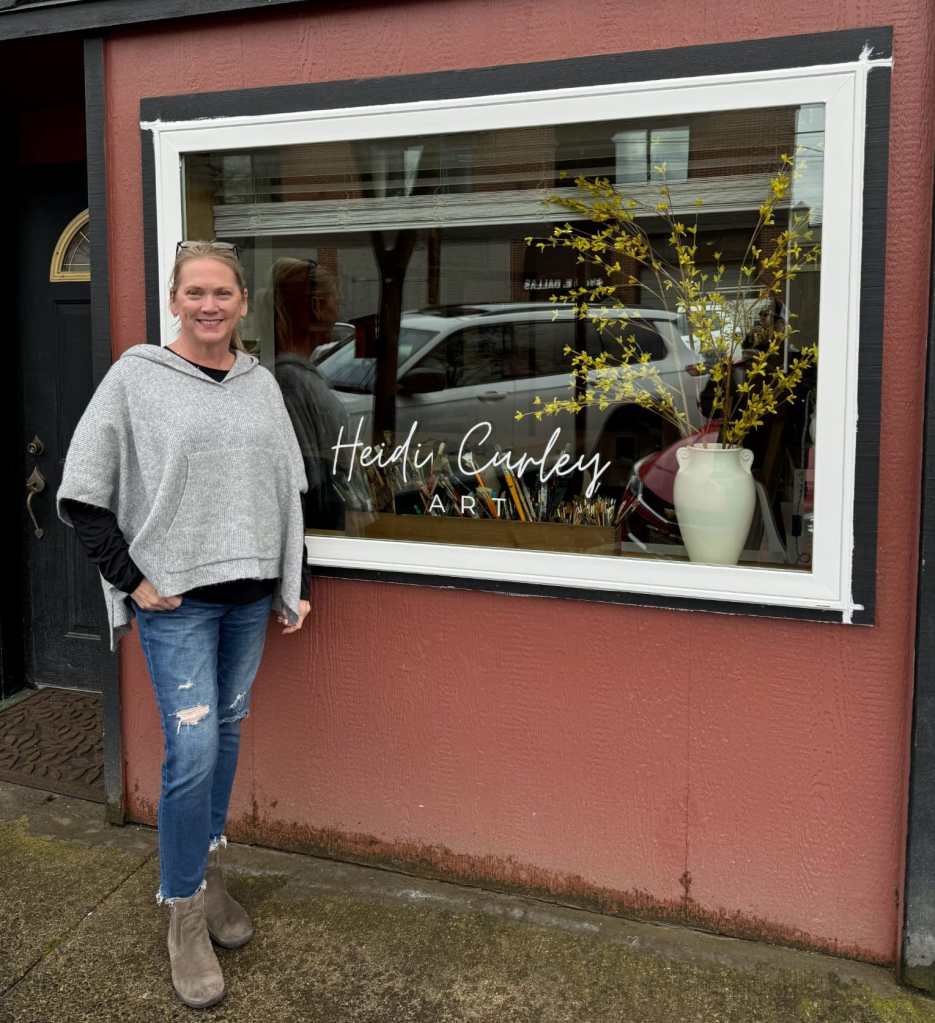
What was Heidi like as a child? What were you interested in? Are you originally from this area?
¿Cómo era Heidi de niña? ¿Qué te interesaba? ¿Sos originaria de esta zona?
I was born and raised in Milwaukie, Oregon. I had one older brother and one younger sister. My brother died when I was nine years old. It was a very sad time for our family. I had a great childhood full of love and laughter and family. I grew up in the 70’s. We lived in a neighborhood that had a bunch of kids and we would run around together from the minute we woke up until it was time to go to bed. Summertime was the very best. We would play games, listen to music on the radio, and we love sitting around together listening to our favorite albums. We would swim, ride our bikes, walk to the grocery store and buy a 25 cent bottle of soda and some candy if we had enough money.
My dad worked at the university in the city, and my mom worked some of the time while I was growing up. She was a huge creative and a great seamstress. My dad was a woodworker in his free time and had a booth at the Portland Saturday Market. He was one of the original vendors and participated for over 30years. Our house always was decorated beautifully. My parents loved to garden and I have followed in that love of blooms.
Nací y crecí en Milwaukie, Oregon. Tenía un hermano mayor y una hermana menor. Mi hermano murió cuando yo tenía nueve años. Fue una época muy triste para nuestra familia. Tuve una infancia llena de amor, risas y muy familiar. Crecí en los años 70. Vivíamos en un barrio en el que había muchos niños y estábamos juntos desde que nos despertábamos hasta que llegaba la hora de acostarnos. El verano era lo mejor. Jugábamos, escuchábamos música en la radio y nos encantaba sentarnos juntos a escuchar nuestros discos favoritos. Nadábamos, usábamos nuestras bicicletas, íbamos caminando al supermercado y comprábamos una botella de refresco por 25 céntimos y algún caramelo si teníamos suficiente dinero.
Mi papá trabajaba en la universidad de la ciudad y mi mamá tenía un trabajo de medio tiempo mientras yo crecía. Era muy creativa y una gran costurera. Mi papá era carpintero en su tiempo libre y tenía un puesto en el Portland Saturday Market. Fue uno de los vendedores originales y participó durante más de 30 años. Nuestra casa estaba siempre muy bien decorada y a mis padres les encantaba la jardinería; yo conservo ese amor por las flores.

I always enjoyed school and I loved my friends. I played basketball, softball and was a gymnast. I took piano lessons as a child and wish that I would’ve stuck with it. I wanted to be a nurse since I was six years old. I graduated from OHSU in Portland OR with a Bachelor of Science in Nursing and worked as a Medical/Surgical nurse for a couple of years in Chicago IL. Then trained to Labor and Delivery when we moved back to Oregon where I worked for 20 years.
Siempre me gustó la escuela y amaba a mis amigos. Jugué al basket, al softball y fui gimnasta. De niña tomé clases de piano y ojalá hubiera seguido con ello. Quería ser enfermera desde que tenía seis años. Me gradué de OHSU en Portland OR con una Licenciatura en Ciencias en Enfermería y trabajé como enfermera médica/quirúrgica durante un par de años en Chicago IL . Luego hice una formación como enfermera obstétrica cuando nos mudamos nuevamente a Oregon, donde trabajé durante 20 años.
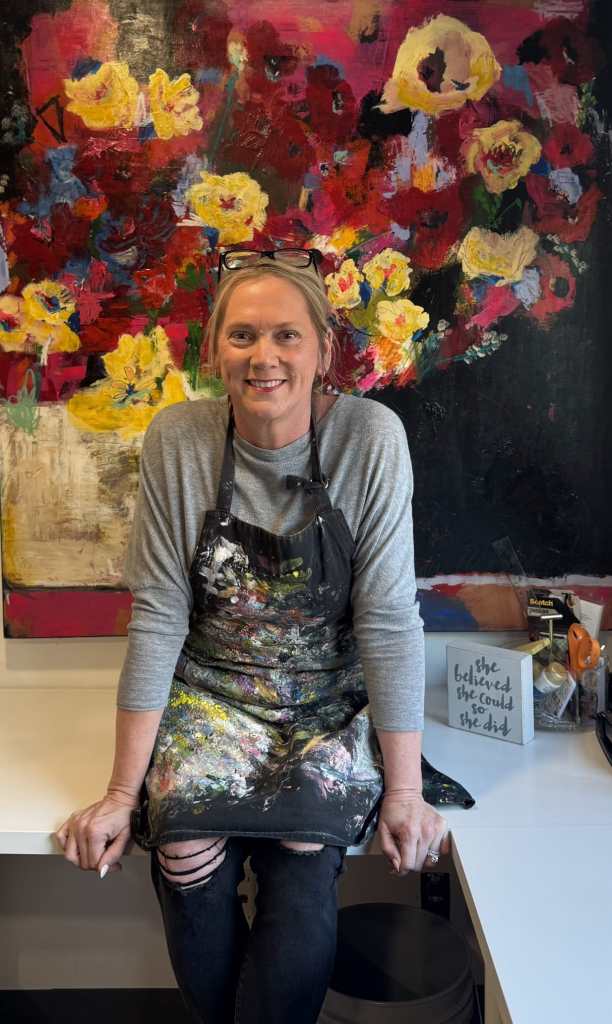
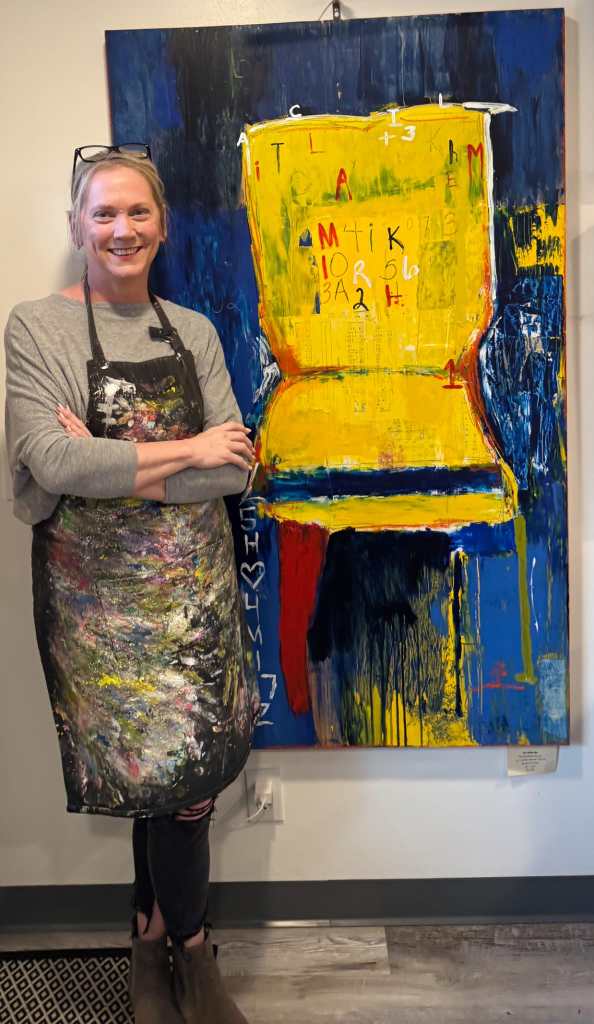
When did you start painting?
I started painting as a way of healing after the death of my husband in 2010. This allowed me to express my feelings and let everything on the inside come out onto the canvas.
¿Cuándo empezaste a pintar?
Empecé a pintar como forma de sanación tras la muerte de mi marido en 2010. Esto me permitió expresar mis sentimientos y dejar que todo lo que tenía dentro saliera al lienzo.
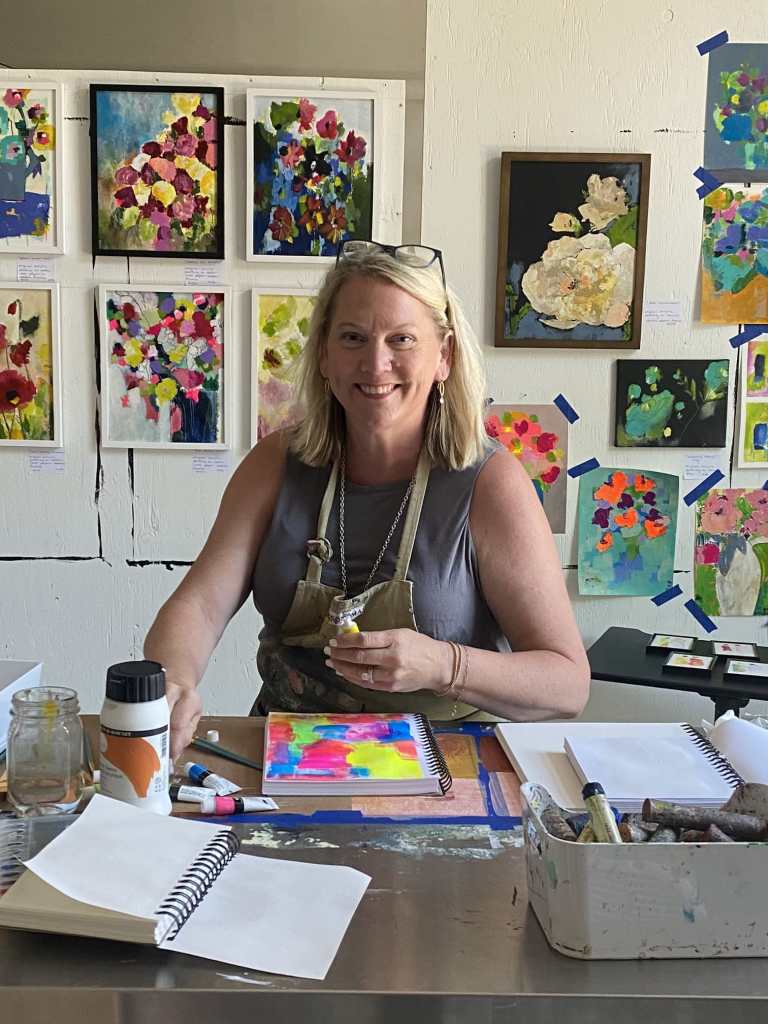
Which mediums do you feel most comfortable with?
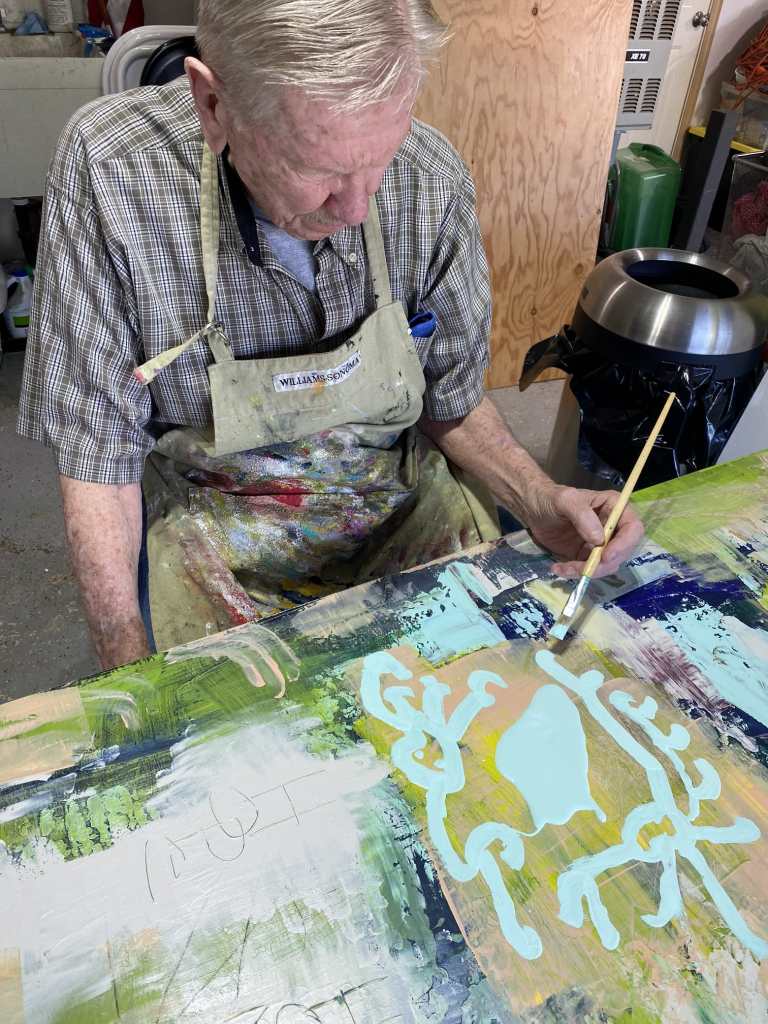
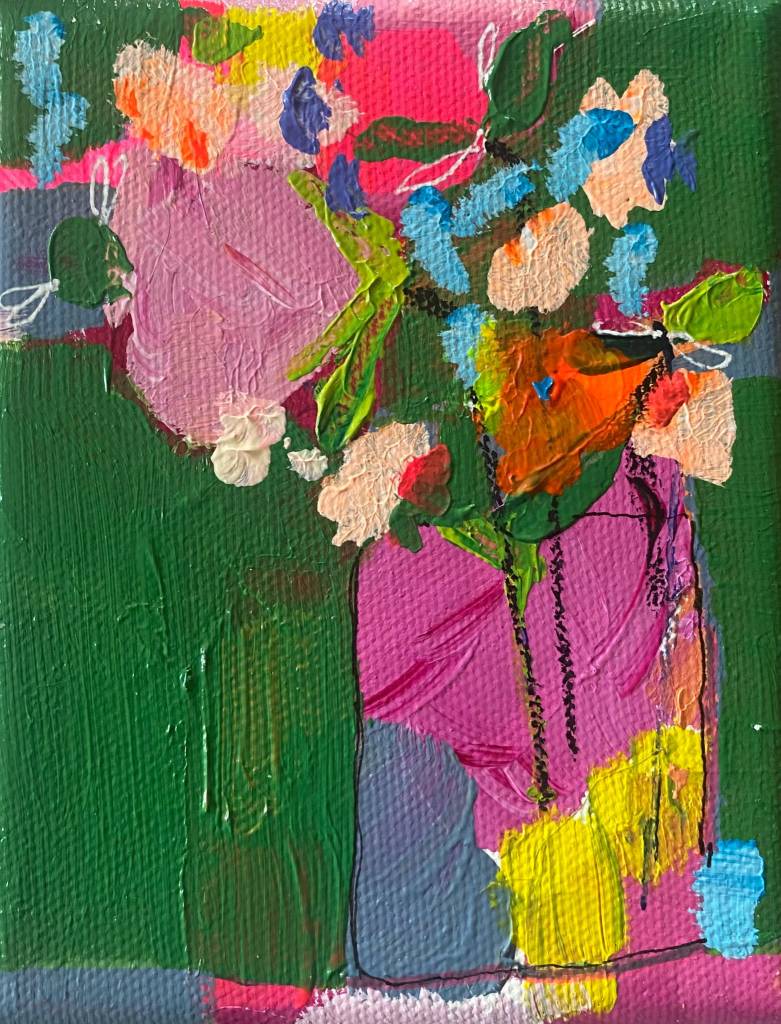
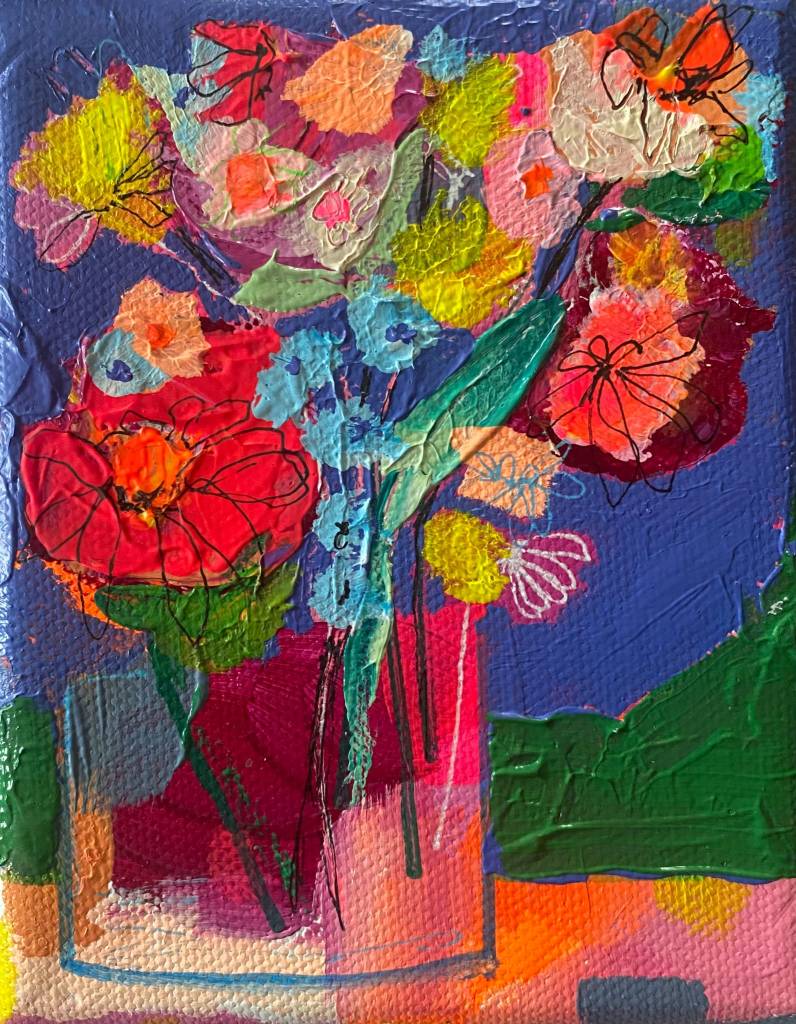
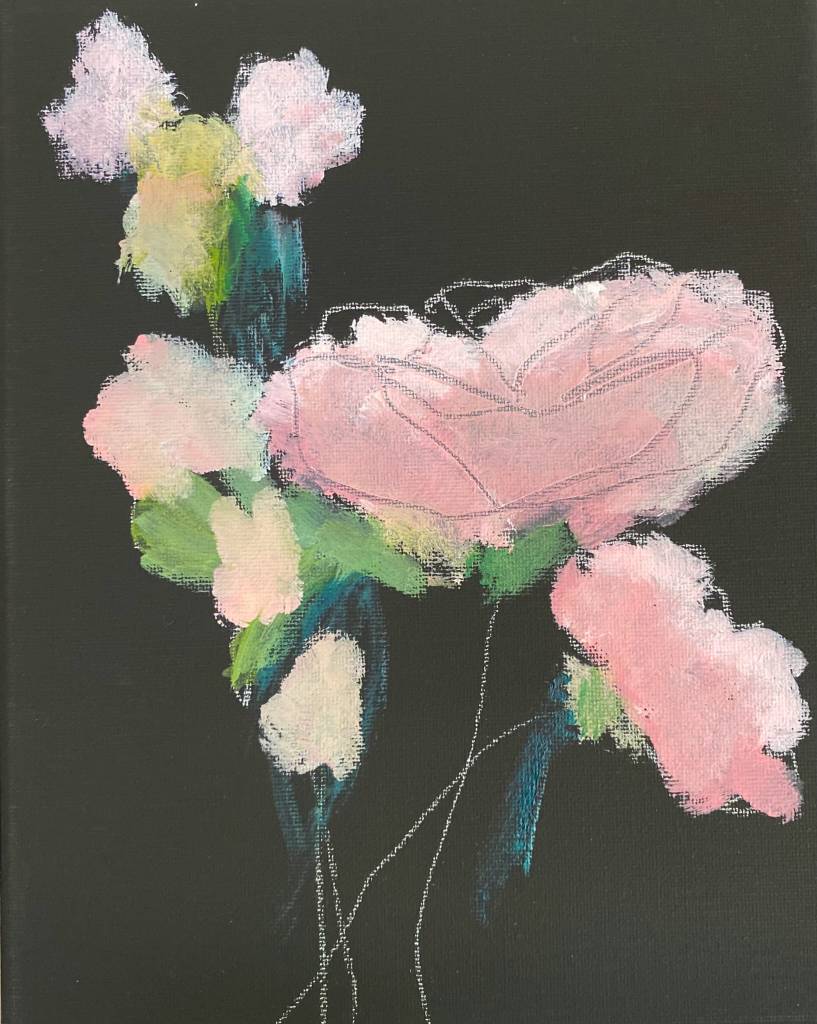
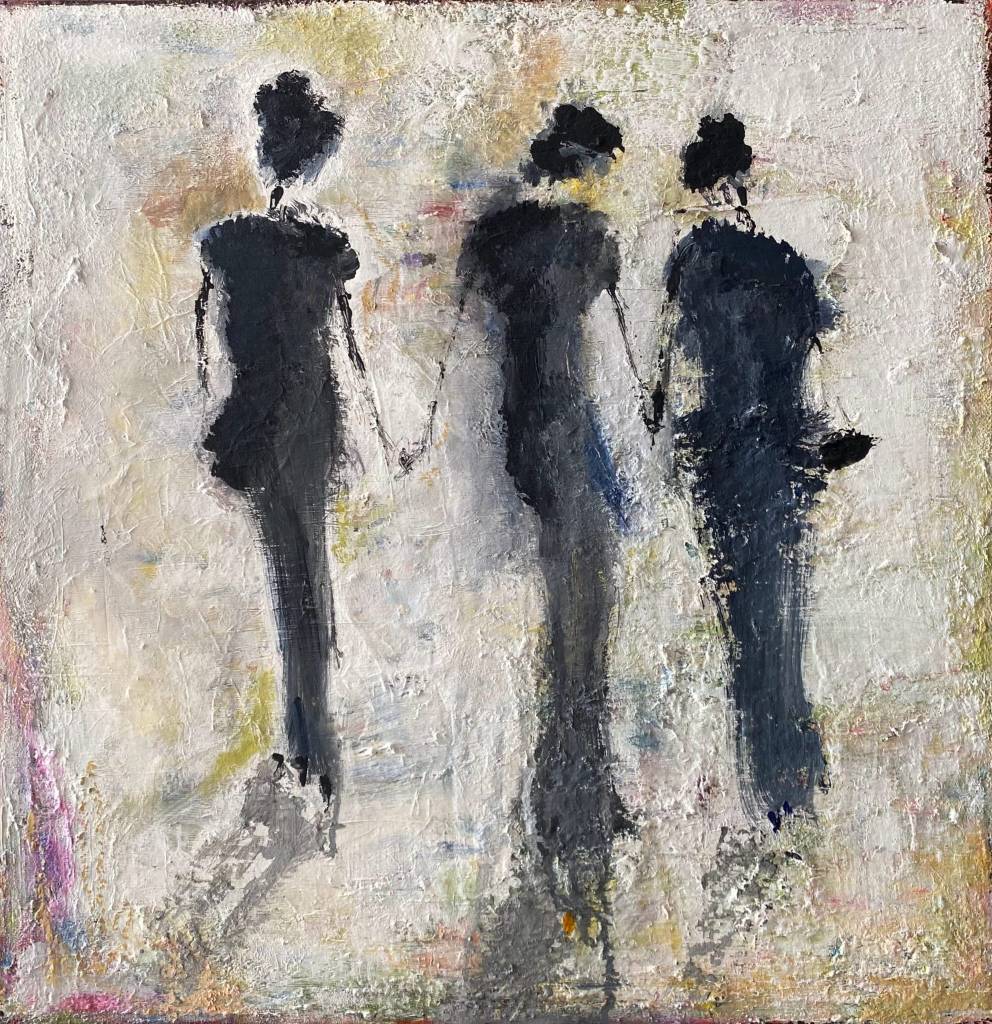
I am a mixed media abstract artist. I love to layer paper and other materials. I use acrylic paint to introduce color to my pieces. I always write on the canvas before I begin the layering process. This allows me to come to a blank canvas and set intentions for the piece. It could be some personal thoughts, song lyrics, my to do list, a memory or just random letters swirling across the canvas…it’s just a way to get the painting started without worry about the outcome.
¿Con qué técnicas artísticas te sentís más cómoda?
Soy una artista abstracta de técnicas mixtas. Me encanta crear capas de papel y otros materiales. Utilizo pintura acrílica para dar color a mis obras. Siempre escribo en el lienzo antes de empezar el proceso de superposición. Esto me permite llegar a un lienzo en blanco y establecer las intenciones de la obra. Pueden ser pensamientos personales, letras de canciones, mi lista de cosas por hacer, un recuerdo o simplemente letras al azar que se arremolinan en el lienzo… Es una forma de empezar a pintar sin preocuparme por el resultado.
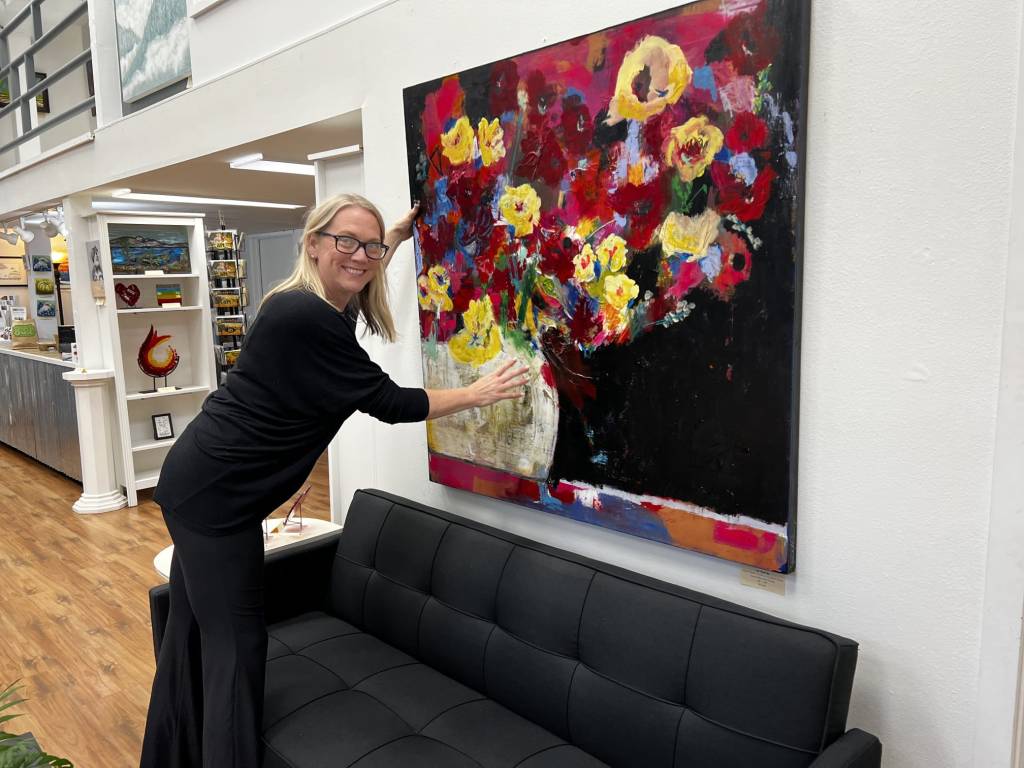
I know you do journaling and morning pages with art—what is that practice like?
Each morning with a journal or a piece of paper or an old book I write for 10 minutes. Sometimes I tell a story, sometimes my worries, sometimes happy thoughts sometimes sad ones. I don’t purposefully think about what I am going to write, I just start. And for 10 minutes I write not worrying about spelling, punctuation or if I am dotting my “I’s” or crossing my “T’s”…I just write. And then, I cover it all up with paint. I have found this to be a very healing process. It allows me to get my thoughts out and then I cover it up with paint and I know no one can read it. This process was so important to my healing in the days and years after my husband died.
Sé que escribís diarios y páginas matutinas con arte ¿cómo es esa práctica?
Cada mañana, con un diario, un trozo de papel o un libro viejo, escribo durante 10 minutos. A veces cuento una historia, a veces mis preocupaciones, a veces pensamientos alegres, a veces tristes. No pienso a propósito en lo que voy a escribir, simplemente empiezo. Y durante 10 minutos escribo sin preocuparme por la ortografía, la puntuación o si estoy poniendo los puntos sobre las íes… simplemente escribo. Y luego lo cubro todo con pintura. He descubierto que es un proceso muy curativo. Me permite sacar mis pensamientos y luego los cubro con pintura y sé que nadie puede leerlos. Este proceso fue importantísimo para mi curación en los días y años posteriores a la muerte de mi marido.
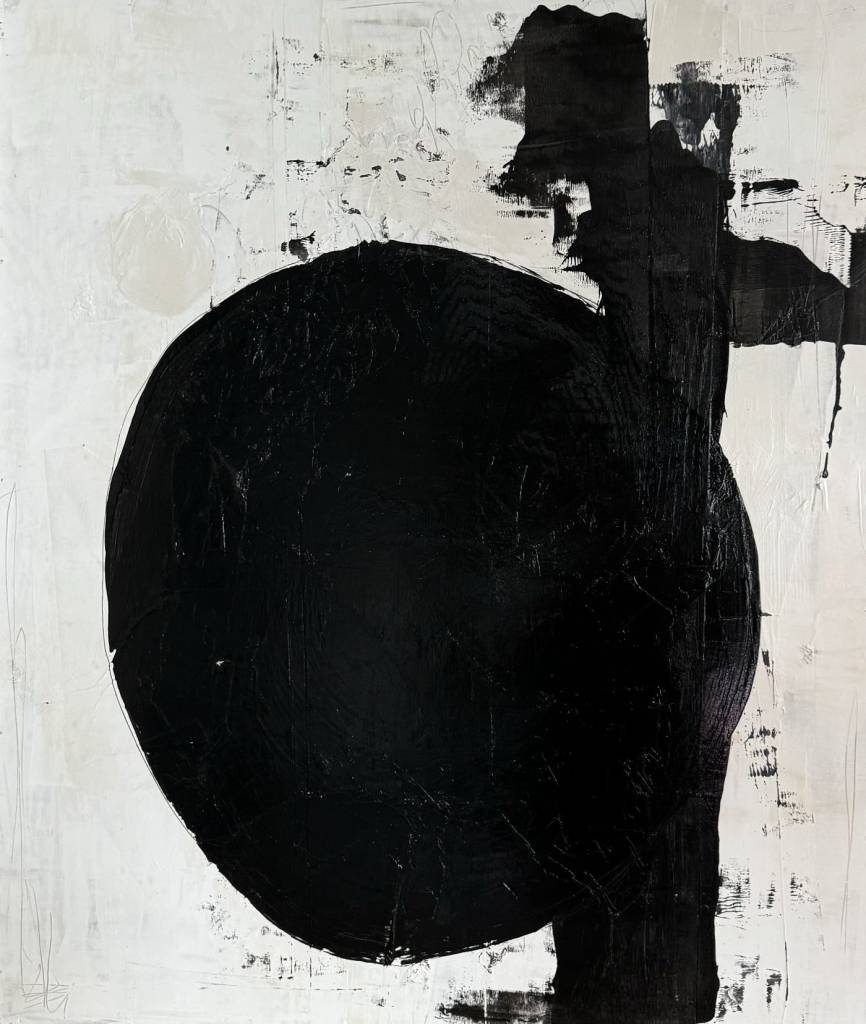
You are at a point in your life where taking care of your father and accompanying your parents-in-law has become part of your day-to-day life. What are your reflections on this moment and the challenges it brings?
I called this time “In the meantime”. Caring for our parents. It isn’t that it was unexpected, but it just happens all of a sudden one minute your helping kids get out the door and off to college and the next minute you’re moving parents in to help care for them due to aging, illness or both. Mark, my husband, and I care for my dad who has Alzheimer’s, he is 91 !! He moved in with us four years ago when he was diagnosed. It is a blessed time, but also a very hard time. Alzheimer’s is a thief. It has robbed me of my dad. It has robbed him of a voice. It has robbed him of being able to take care of himself. But there also have been some very beautiful moments along our way and I choose to focus on those. He will not always be here, so I am thankful for being able to tuck him in every night and to feed him his favorite foods and to talk about our family. He is quiet now and that is probably the hardest thing. We also care for two of Mark’s parents. They don’t live with us, but we are responsible for their appointments, bill paying, social calendar and such. His dad is 92 and still very much with opinion and wit. How lucky are we that we can help. This in the meantime…
Estás en una etapa de la vida en la que cuidar a tu padre y acompañar a tus suegros se ha vuelto parte de tu día a día. ¿Qué reflexiones te surgen sobre este momento y los desafíos que esto trae?
Llamé a este tiempo «Mientras tanto». Cuidar de nuestros padres. No es que fuera inesperado, pero ocurre de repente que en un momento estás ayudando a tus hijos a salir por la puerta para ir a la universidad y al siguiente estás trasladando a tus padres para que te ayuden a cuidarlos debido al envejecimiento, a una enfermedad o a ambas cosas. Mark, mi marido, y yo cuidamos de mi papá, que tiene Alzheimer y 91 años. Se mudó con nosotros hace cuatro años, cuando le diagnosticaron la enfermedad. Es una época bendita, pero también muy dura. El Alzheimer es un ladrón. Me ha robado a mi padre. Le ha robado la voz. Le ha robado la capacidad de cuidar de sí mismo. Pero también ha habido momentos muy bonitos a lo largo de nuestro camino y elijo centrarme en ellos. No siempre estará aquí, así que estoy agradecida por poder arroparle cada noche y darle de comer su comida favorita y hablar de nuestra familia. De ser muy activo ahora no hace nada y eso es probablemente lo más difícil. También cuidamos a dos de los padres de Mark. No viven con nosotros, pero somos responsables de sus citas, el pago de facturas, el calendario social y demás. Su padre tiene 92 años y todavía tiene mucha opinión e ingenio. Qué suerte tenemos de poder ayudar. Esto mientras tanto…

What is the Art4 Healing Method?
Art4Healing® is a transformative approach to emotional healing through art and creative expression. Founded by Laurie Zagon, a New York artist and university professor, the method emerged when she facilitated a workshop for overworked Wall Street executives. She quickly realized the powerful impact of art as a tool for emotional healing, and thus, Art4Healing® was born.
This approach provides a safe, structured space for individuals to explore and process emotions, helping them heal from pain, grief, fear, or stress. This method is an intentionally guided workshop that uses color to abstractly express your feelings when you do not have the words to do so.
¿En qué consiste el método Art4 Healing?
Art4Healing® es un enfoque transformador de la curación emocional a través del arte y la expresión creativa. Fundado por Laurie Zagon, artista neoyorquina y profesora universitaria, el método surgió cuando impartió un taller para ejecutivos de Wall Street con exceso de trabajo. Rápidamente se dio cuenta del poderoso impacto del arte como herramienta de sanación emocional, y así nació Art4Healing®.
Este método proporciona un espacio seguro y estructurado para que las personas exploren y procesen emociones, ayudándoles a curarse del dolor, la pena, el miedo o el estrés. Este método es un taller guiado intencionadamente que utiliza el color para expresar de forma abstracta tus sentimientos cuando no tienes palabras para hacerlo.


What projects are you currently working on?
Currently I am working on being contracted with Washington State to take DDA Respite Vouchers as payment for art classes for special needs children in my community.
I am also in the process of working towards a Non-Profit organization so that I can further my reach to my community using art as a form of healing. I will continue working with first responders, military personnel, caregivers and teens. I have a specific focus on mental health awareness and continue to be excited to give back to my community.
I also teach private and group classes including Art Journaling and Abstract Mixed Media.
¿En qué proyectos estás trabajando actualmente?
Actualmente estoy trabajando para que el estado de Washington me contrate para recibir bonos de asistencia como pago de clases de arte para niños con necesidades especiales de mi comunidad.
También estoy en el proceso de trabajar para una organización sin fines de lucro para que el arte llegue como forma de curación a la mayor parte de mi comunidad. Voy a seguir trabajando con socorristas, el personal militar, los cuidadores y los adolescentes. Tengo un enfoque específico en la concienciación sobre la salud mental y sigo emocionada de devolver algo a mi comunidad.
También doy clases particulares y en grupo, incluyendo Art Journaling y Abstract Mixed Media.
Contact Heidi Curley
Please visit my website heidicurleyart.com for more information
Or email me at heidicurleyart@gmail.com if you have any questions
You may also follow me on FB Heidi Curley Art and IG at https://www.instagram.com/heidicurleyart/
Press
The Post Record
https://www.camaspostrecord.com/news/2025/mar/13/camas-artist-seeks-to-stomp-out-loneliness/


 VIAJES CRONICAS ARTE
Replica a Ricardo Jezzi Cancelar la respuesta