

Florida Oeste, Buenos Aires, Argentina

«Si para Discépolo el tango es una emoción triste que se baila, el filete es una emoción alegre que se pinta»
Ricardo Gómez
Maestro Fileteador
«If for Discépolo the tango is a sad emotion that is danced, the «filete technique» is a happy emotion that is painted».
Ricardo Gómez
Maestro Fileteador

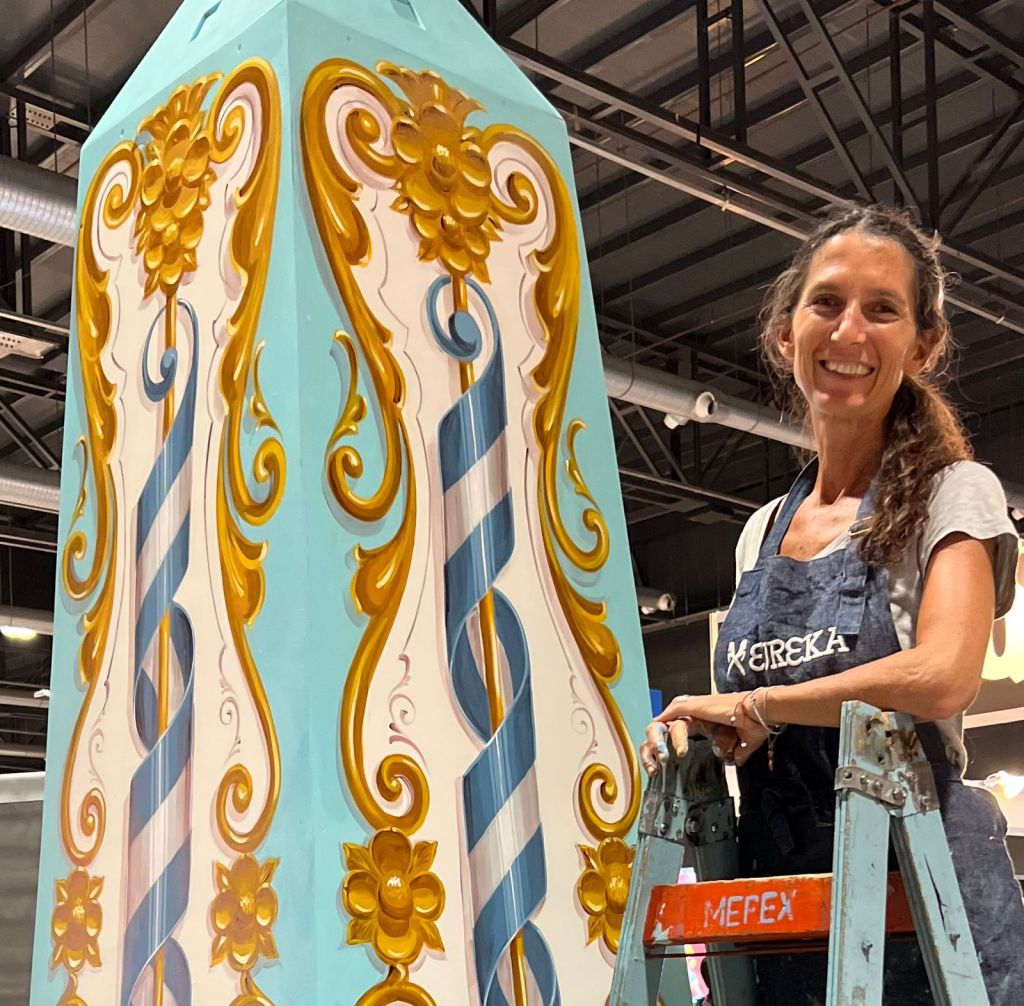
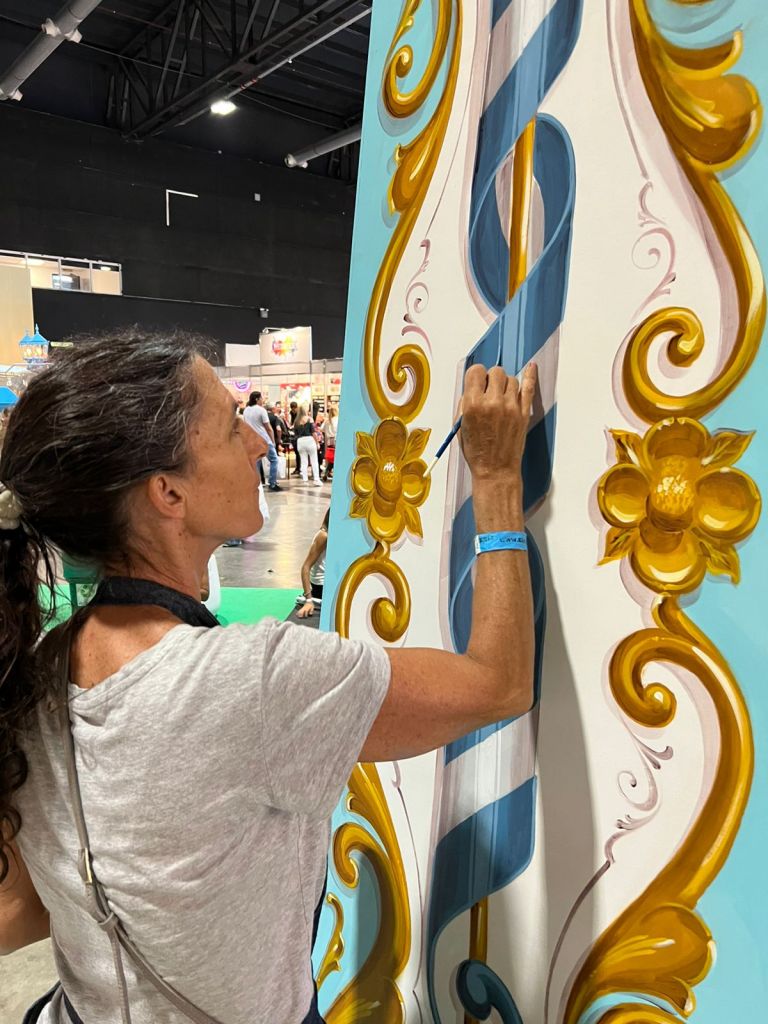
Conocí a Silvia Dotta y a su arte gracias al algoritmo de Instagram. En medio de las publicaciones de amigos apareció un video de una artista (hasta ese momento desconocida para mi) quien pintaba una batidora con la técnica de fileteado.
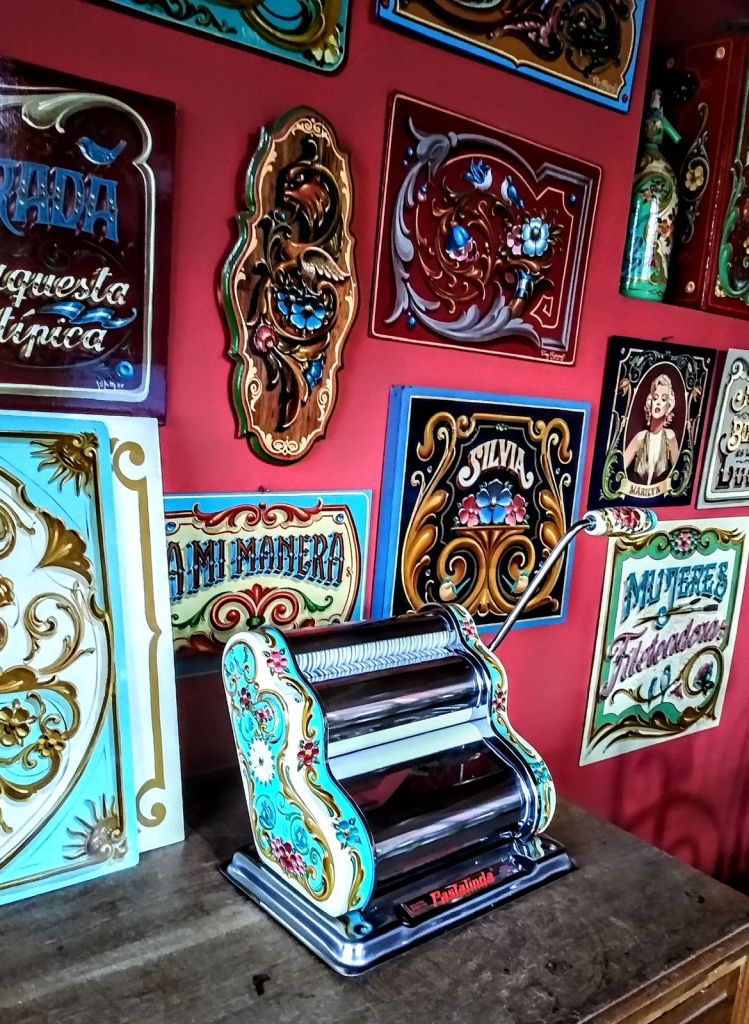
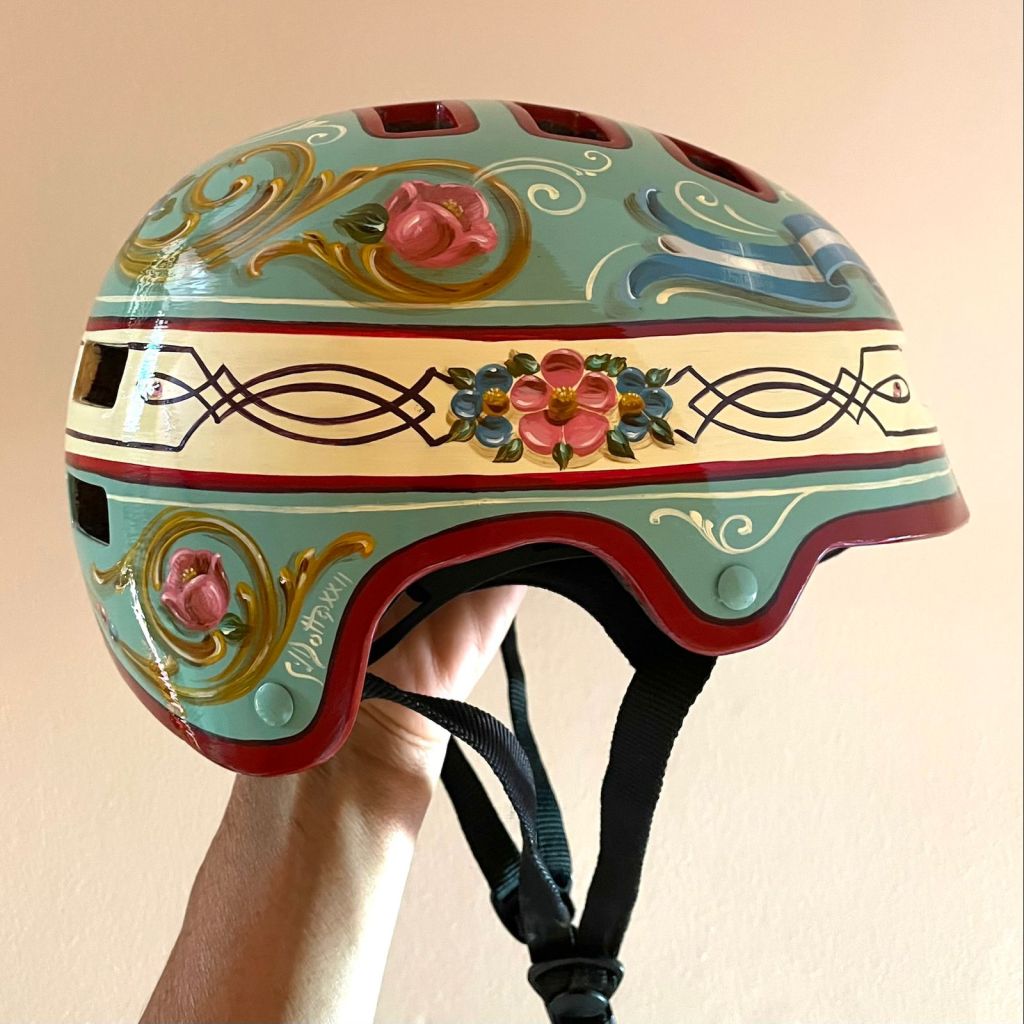
Mi corazón conectó de inmediato con Buenos Aires y algunos de sus barrios como San Telmo, Mataderos o La Boca donde es posible ver en sus ferias de artesanos esta técnica pictórica que combina colores vivos con estilos tipográficos específicos.
I met Silvia Dotta and her art thanks to Instagram’s algorithm. In the middle of friends’ posts appeared a video of an artist (until that moment unknown to me) who was painting a blender with the filleting technique.
My heart immediately connected with Buenos Aires and some of its neighborhoods such as San Telmo, Mataderos or La Boca where it is possible to see in their artisan fairs this pictorial technique that combines bright colors with specific typographic styles.
La artista del video era Silvia Dotta https://www.instagram.com/silvia_dotta/ a quien decidí enviarle un mensaje para invitarla a participar de Amigas y Amigos Artistas. Y a modo de presentación le adjunté un link del trabajo de Mabel Vicentef https://www.instagram.com/mabelvicentef/para que supiera de qué se trataba el proyecto.
Nuestro encuentro fue virtual y en esa charla amena tuve la oportunidad de conocer a esta gran artista.
The artist of the video was Silvia Dotta https://www.instagram.com/silvia_dotta/ to who I decided to send a message to invite her to participate in Artistic Friends. And as a way of introduction I attached a link to Mabel Vicentef‘s https://www.instagram.com/mabelvicentef/ work so that she would know what the project was about.
Our meeting was virtual and in that pleasant chat I had the opportunity to meet this great artist.

La historia artística de Silvia es rica y variada: dibujante, pintora, actriz y desde hace dieciséis años fileteadora. Podría decirse que el arte está en su ADN ya que su bisabuelo Angelo Dotta, quien vivió en Bolonia, fue pintor y letrista según consta en una biografía que escribió su hijo Umberto.
Silvia’s artistic background is rich and diverse: she is a draftswoman, painter, actress and for the last sixteen years she has been a filleteer. It could be said that art is in her DNA since her great-grandfather Angelo Dotta, who lived in Bologna, was a painter and letterer according to a biography written by his son Umberto.

Silvia me contó que el filete porteño nació en Buenos Aires entre finales del siglo diecinueve y principios del veinte coincidiendo con las diferentes corrientes inmigratorias que llegaron de Europa.
Fueron los italianos y algunos pocos franceses los que comenzaron a pintar los carros con los que repartían sus productos, con ornamentos y colores brillantes, símbolos de prosperidad. Ese tipo de pintura se inspiró en el arte decorativo de principios de siglo y tuvo una impronta propia en Buenos Aires.
Silvia told me that the porteño filete technique was born in Buenos Aires between the end of the nineteenth century and the beginning of the twentieth century, along with the different immigration currents that arrived from Europe.
It was the Italians and a few Frenchmen who began to paint the wagons with which they delivered their products, with ornaments and bright colors, symbols of prosperity. This type of painting was inspired by the decorative art of the beginning of the century and had its own style in Buenos Aires.
Es muy interesante la historia de cómo Silvia se convirtió en fileteadora. Llegaron sus 40 y se cumplió el sueño de la casa propia junto a su familia y a la vez apareció una necesidad de cambio desde lo artístico. Y aunque el fileteado siempre había sido de su interés consideró que era demasiado tarde para embarcarse en un nuevo aprendizaje artístico.
The story of how Silvia became a «fileteadora» is very interesting. Her 40’s came and the dream of owning her own house with her family was fulfilled, and at the same time a need for change appeared from the artistic point of view. And although filleting technique had always been of interest to her, she felt it was too late to embark on a new artistic journey.
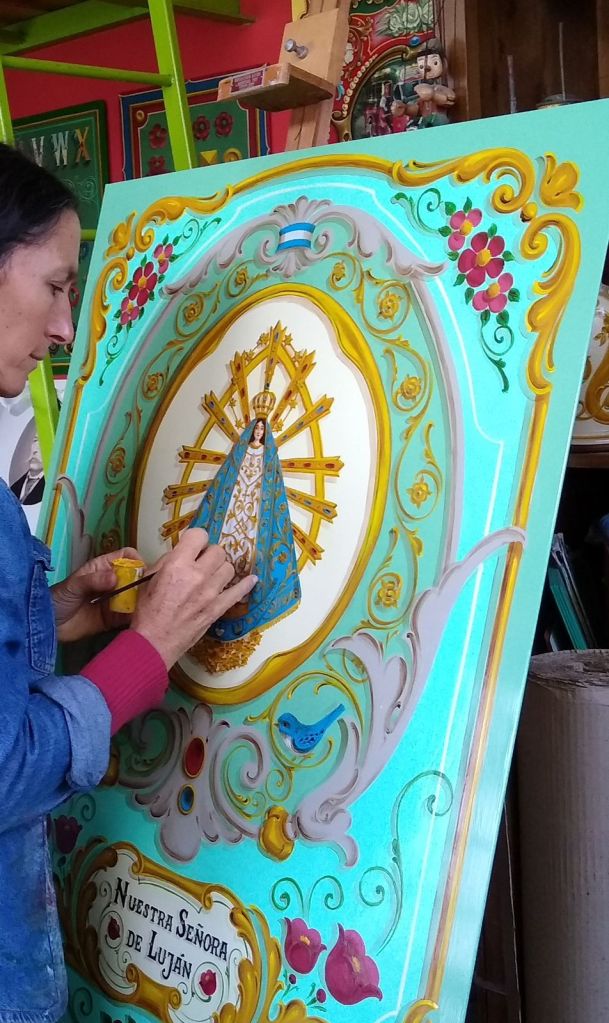
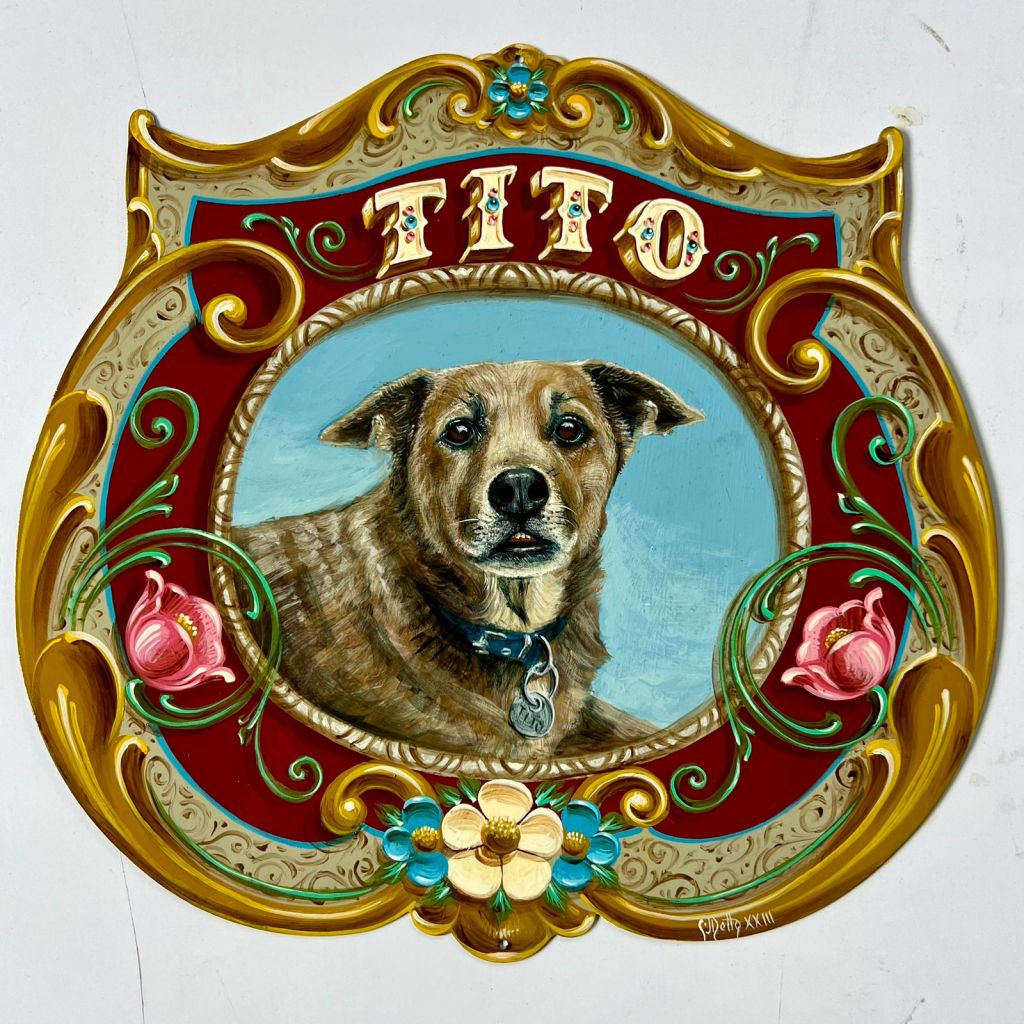
Para ese cumpleaños una amiga le regaló un cuadrito fileteado que había comprado en la Feria de San Isidro. Muy poco tiempo después conoció, caminando con su perro Tito por el barrio, a Susana De Leon la pintora del cuadro que Silvia tenía en su casa. Este suceso Silvia lo tomó como una señal y fue con Susana que dio sus primeros pasos en el arte del fileteado.
For that birthday, a friend gave her a small filleted painting that she had bought at the San Isidro Fair. A short time later, walking with her dog Tito through the neighborhood, she met Susana De Leon, the painter of the painting that Silvia had in her house. Silvia took this event as a sign and it was with Susana that she took her first steps in the art of fileteado.
Esto fue un camino de ida. Silvia continuó su formación como fileteadora con los maestros José Espinosa https://www.instagram.com/joseernestoespinosa/, Adrián Clara https://www.instagram.com/fileteadoletraclaraadrian/ y Marcelo Sainz https://www.instagram.com/marcelosainzfileteador/
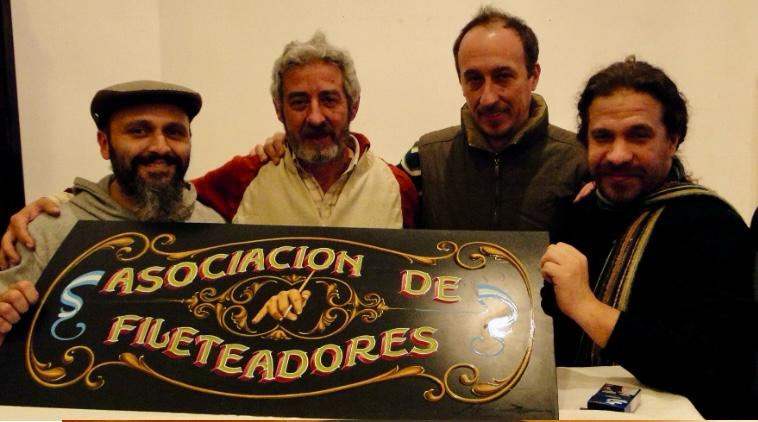
En 2012 liderados por Fernando «Memo» Caviglia (fallecido en 2020) y José Espinosa junto a un grupo de fileteadores entre los que se encontraba Silvia fundaron la Asociación de Fileteadores https://asociacionfileteadores.com/https://www.instagram.com/asociacion_de_fileteadores/
This was a one-way street. Silvia continued her training as a «fileteadora» with masters José Espinosa https://www.instagram.com/joseernestoespinosa/, Adrián Clara https://www.instagram.com/fileteadoletraclaraadrian/ and Marcelo Sainz https://www.instagram.com/marcelosainzfileteador/
In 2012, led by Fernando «Memo» Caviglia (who passed away in 2020) and José Espinosa, together with a group of filleters, including Silvia, founded the Asociación de Fileteadores.
https://asociacionfileteadores.com/https://www.instagram.com/asociacion_de_fileteadores/


Memo Caviglia como presidente y los socios fundadores de la Asociación de Fileteadores realizaron acciones conjuntas con el equipo de Patrimonio de la Ciudad de Buenos Aires para que el filete porteño fuese declarado Patrimonio Cultural Inmaterial de la Humanidad por la Unesco en el año 2015.
Memo Caviglia as president and the founding members of the Asociación de Fileteadores carried out joint actions with the Heritage team of the City of Buenos Aires so that the porteño fileteado technique was declared as Intangible Cultural Heritage of Humanity by Unesco in 2015.
Silvia trabaja en su taller pintando objetos por encargo. Hace unos meses le encargaron un mate grabado con el nombre Jimmy sin darle demasiadas especificaciones. Tiempo después y gracias a un video que se viralizó en redes, supo que Bizarrap le llevó ese mate de regalo a Jimmy Fallon cuando lo visitó en su programa The tonight show.
Esto generó que unas fans de Bizarrap de España e Italia le encargaran a Silvia una chapa para regalarle al cantante sabiendo que este arte es de su gusto 🙂
Silvia works in her atelier painting objects on commission. A few months ago she was commissioned a mate engraved with the name Jimmy without giving her too many specifications. Some time later and thanks to a video that went viral on social networks, she found out that Bizarrap took that mate as a gift to Jimmy Fallon when he visited him on his program The Tonight Show.
This generated that some Bizarrap fans from Spain and Italy asked Silvia to make a metal badge to give to the singer, knowing that this art is of his preference 🙂
Al final de la charla y gracias a un comentario de Silvia descubrí cómo Instagram nos había conectado.
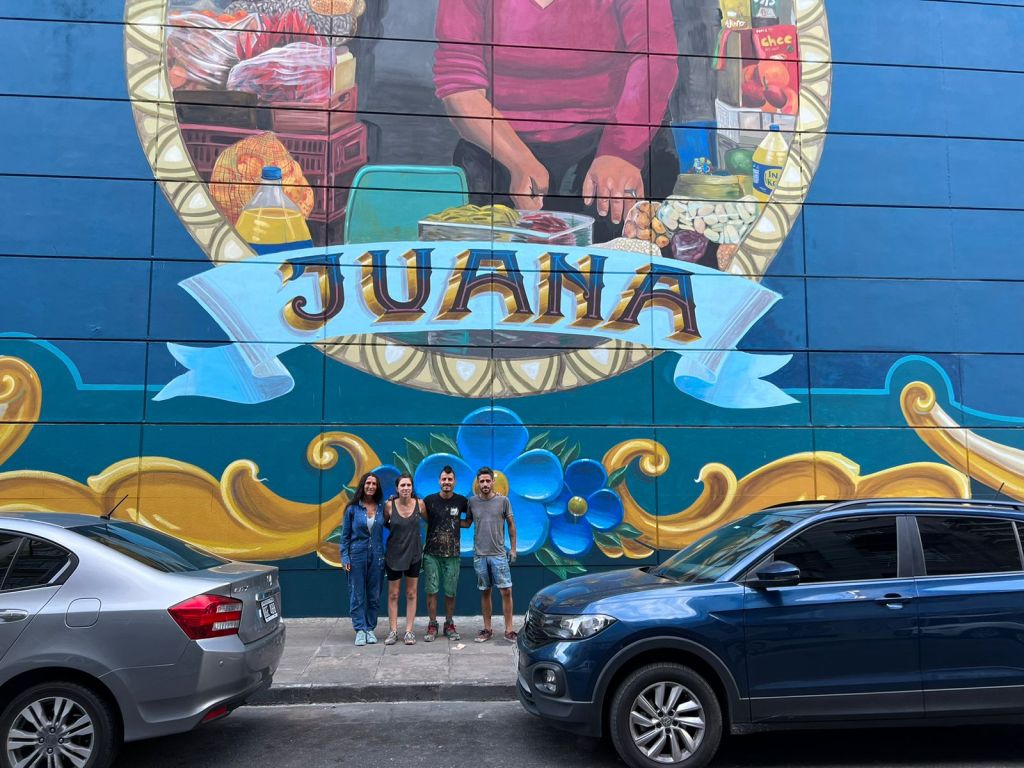
En el 2022 Silvia Dotta y Mabel Vicentef fueron convocadas para un proyecto con mujeres artistas organizado por Abasto Barrio Cultural en la Ciudad de Buenos Aires.
El resultado fue un mural llamado Juana que representa a las trabajadoras del barrio. Me pareció divertido haber elegido el artículo de Mabel sin saber que no sólo se conocían sino que además habían trabajado juntas 🙂
At the end of the talk and thanks to a comment from Silvia I discovered how Instagram had connected us.
In 2022 Silvia Dotta and Mabel Vicentef were invited to participate in a project with women artists organized by Abasto Barrio Cultural in the City of Buenos Aires.
The result was a mural called Juana which represents the working women of the neighborhood. I thought it was funny to have chosen Mabel’s article without knowing that they not only knew each other but had also worked together 🙂


Me interesa destacar a Silvia como artista y también como una mujer inspiradora. Su experiencia nos invita a no quedarnos, a no limitarnos y a seguir nuestros sueños olvidándonos de nuestras edades. Nunca es tarde, ese debe ser nuestro lema.
I am interested in highlighting Silvia as an artist and also as an inspiring woman. Her experience invites us not to stay, not to limit ourselves and to follow our dreams forgetting our ages. It is never too late, that should be our motto.

Quiero agradecerle a Silvia por sumarse a este proyecto, por su tiempo y por la buena energía.
I want to thank Silvia for joining this project, for her time and good vibe.
Para contactar con Silvia Dotta/ Contact Silvia Dotta
https://www.instagram.com/silvia_dotta
Email: silviadotta1@gmail.com
NOTAS
DESTACADOS
PACDA 2023
Paso a paso


 VIAJES CRONICAS ARTE
Replica a Ricardo Jezzi Cancelar la respuesta